

Introduction
China’s jewelry heritage extends far beyond gold and jade. In particular, there is a unique category of collectibles often referred to as “Chinese cultural play jewelry” or “Chinese novelty jewelry.” This term refers to beaded bracelets and ornaments closely tied to history and spirituality, with cultural play beaded bracelets serving as a prime example. Literally meaning “objects for scholars to play with,” the term emphasizes interaction and enjoyment. These pieces are not merely fashion accessories but wearable, interactive cultural artifacts. Over the centuries, this tradition has evolved from a refined pastime of emperors and scholars into a trend celebrated by contemporary collectors and luxury connoisseurs.
The History and Cultural Origins of Chinese Novelty Jewelry
Chinese decorative jewelry is rooted in ancient art, religion, and the aesthetics of daily life. Chinese beaded ornaments date back thousands of years. As early as the Neolithic Age, people wore beads made of stone and jade to symbolize status and blessings. By the Shang and Zhou dynasties, jewelry craftsmanship had reached a high level of sophistication, and nobles wore jade beads, agate pendants, and gold ornaments to signify power and protection.
Buddhism has had a profound influence on this type of cultural prayer bead. Prayer beads were introduced from ancient India around the 2nd century AD and became an important ritual implement for meditation. Monks and lay practitioners use these strings of beads to count mantras and aid in focusing the mind.
By the Ming and Qing dynasties, beaded bracelets had transcended purely religious uses and become a symbol of status and an art form among the court and literati.
Today, wearing Chinese-style beaded bracelets has become a fashionable return to tradition. From entrepreneurs and celebrities to young urbanites, various beaded bracelets can be seen on wrists. It is both a way to reconnect with tradition and a way to distinguish it from mass-market jewelry. Nowadays, Western collectors and luxury consumers are also increasingly attracted to the style of these cultural artifacts, regarding them as accessories that combine art and therapeutic benefits.
Sandalwood bead bracelet: Fragrance and spiritual practice
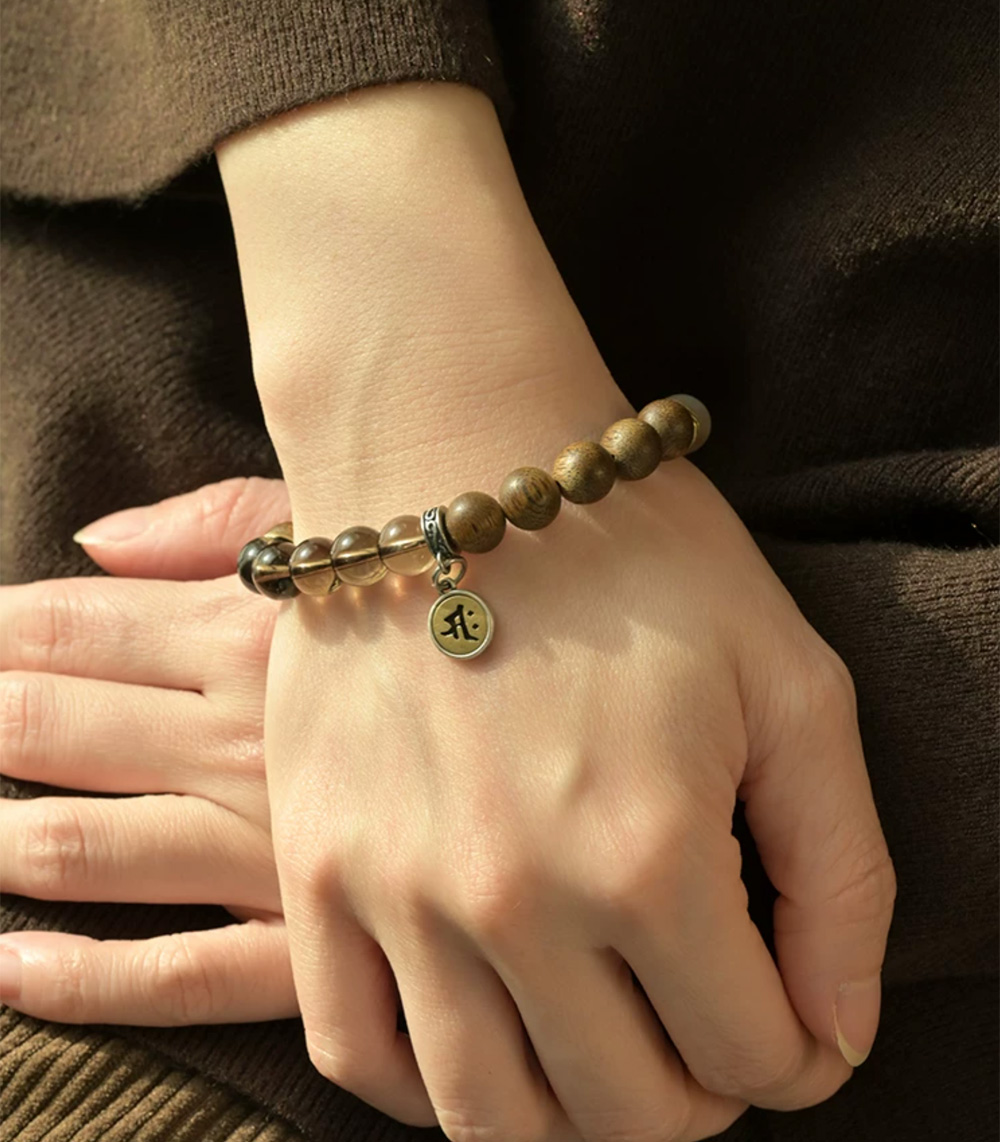
Sandalwood has long been cherished in Chinese culture, renowned for its gentle and lasting natural fragrance. Historically, it has been used in Buddhist prayer beads and temple implements, its calming aroma aiding meditation and prayer. Sandalwood bracelets typically feature round beads, finely polished, and naturally emit a soothing aroma when worn, like a personal aromatherapy treatment. Creating a high-quality sandalwood bracelet requires meticulous craftsmanship. The delicate wood grain is carved into uniformly sized beads, then hand-polished. No synthetic chemicals are used; the luster comes from patient polishing and the wood’s natural oils. Traditionally, monks would repeatedly handle the raw beads to enhance their shine. The finished product has a warm, silky feel. Many believe sandalwood possesses spirituality, and even non-religious individuals consider it a calming companion. In everyday wear, sandalwood bracelets bring a natural, understated elegance, suitable for both casual and formal occasions, expressing the wearer’s pursuit of balance with nature and inner peace. With the increasing scarcity of high-quality, aged sandalwood resources, bracelets made from old, long-lasting fragrant wood are highly sought after by collectors.
Agate and Gemstones: Brilliant Colors and Symbolic Meanings
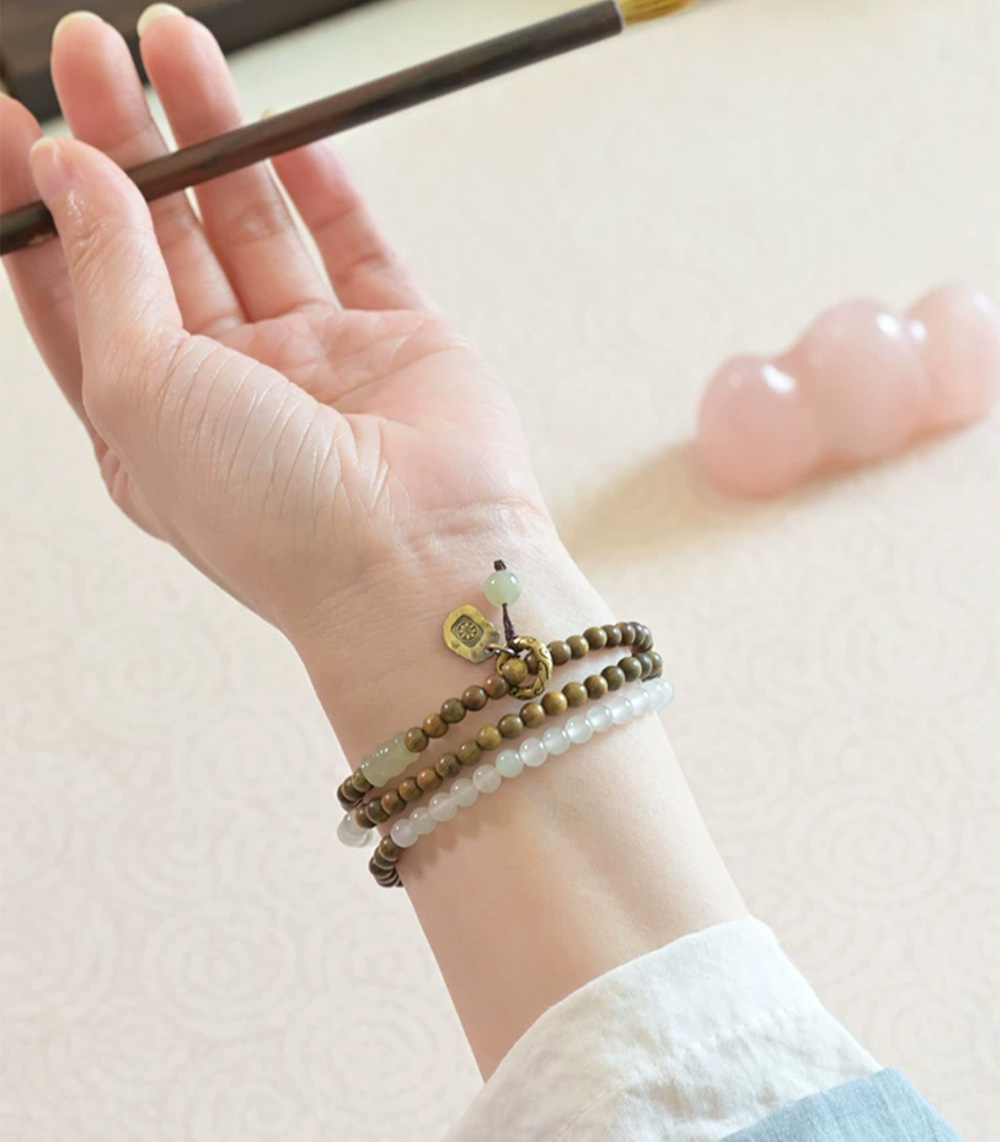
Chinese artisans have been using agate for over two thousand years, from the rich “Southern Red” to the translucent moss agate and the clearly banded banded agate, each possessing its own beauty and symbolism. Red agate is often seen as a symbol of courage and vitality, while green agate signifies harmony.
Unlike Western-style pendant bracelets, traditional Chinese collectible beads emphasize that each bead is a talisman in itself, focusing on their natural beauty and inherent meaning. Craftsmanship is evident in the matching of beads, drilling, and secure stringing. Sometimes, small wooden spacers or metal accessories are used to harmonize the texture, juxtaposing luxury and nature. For the wearer, gemstone bracelets offer both aesthetic appeal and protective symbolism, introducing positive energy, or may be worn simply because of a fondness for a particular color.
Red sandalwood: the wood of emperors and contemporary prestige
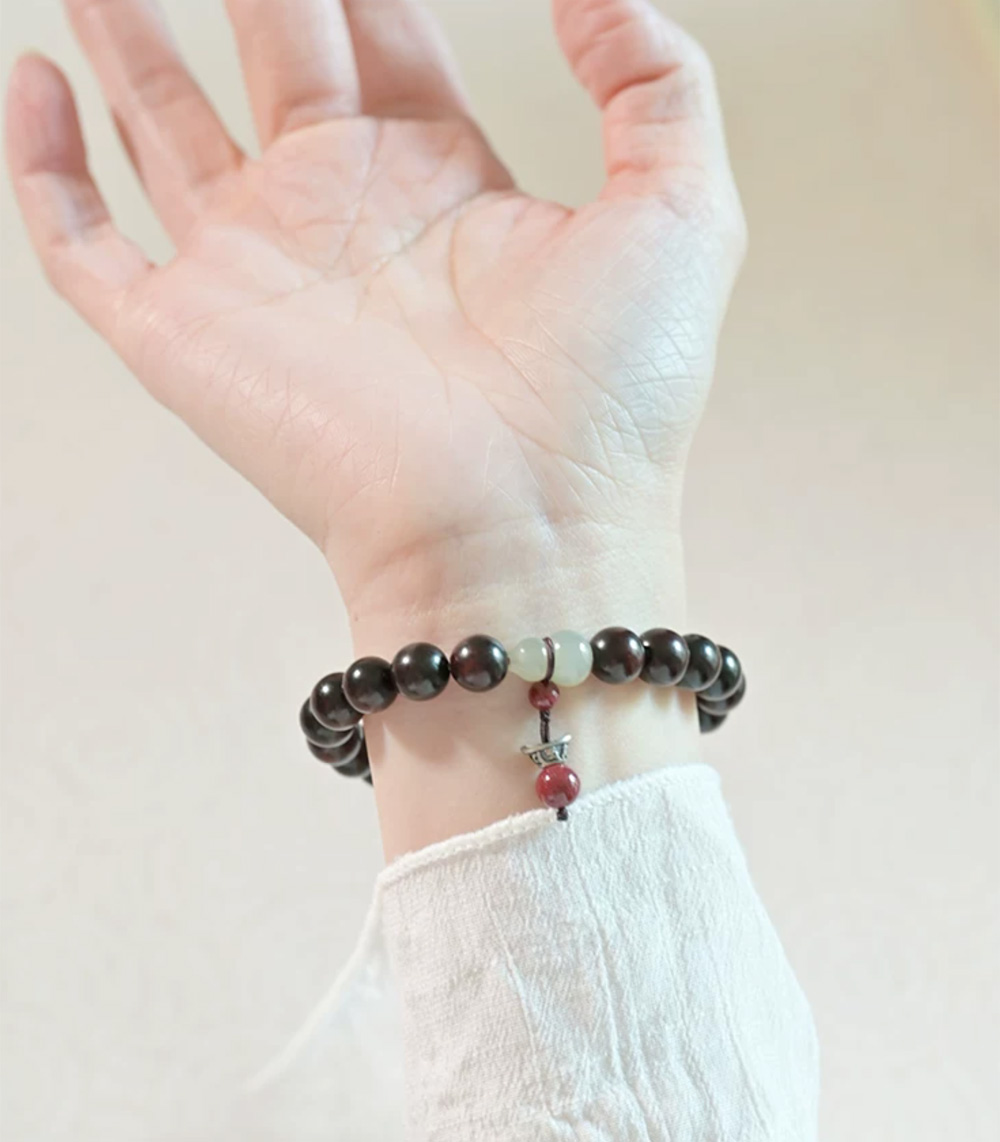
Wearing a small-leaf sandalwood bracelet is a subtle declaration of elite status. The dark-colored beads are simple and understated, yet convey an appreciation for Chinese tradition and imperial aesthetics. Top-grade small-leaf sandalwood has extremely high material value, sometimes exceeding that of gold by weight. Its significance lies not only in its monetary value but also in its historical and connoisseurship significance, often regarded as a treasure to be passed down through generations or circulated among collectors.
Cultural connotations and emotional value
The materials and patterns in antique jewelry often subtly symbolize meaning. Wearing bodhi seeds or sandalwood pays homage to Buddhist mindfulness and compassion; turquoise or agate can serve as personal talismans, reminding one to connect with the beauty of nature. In the digital and fast-fashion age, the tactile sensation of rolling smooth beads between your fingers is almost meditative, offering a moment of tranquility and a connection to antiquity.
Wearing such ornaments also carries cultural pride. For Chinese people, it is a cultural identity that can be admired and appreciated. For Western aestheticians and global collectors, wearing Chinese-style bracelets is a way to understand and respect another civilization. It can spark dialogue and sharing; for example, when others notice the dark wood beads on your wrist, you can tell the story of sandalwood or the significance of bodhi seeds. In a sense, cultural artifacts and jewelry promote cross-cultural connections.
Aesthetically, these bracelets are suitable for those who are not satisfied with mere brilliance. They are organic and understated, and can be paired with casual or formal attire. It is common to wear a luxury watch on one side and a sandalwood bracelet on the other, creating a balance between East and West. Suitable for both men and women, thicker beads convey a sense of composure, while thinner beads exude elegance. Ultimately, the style is given by the wearer.
On an emotional level, the value of cultural artifacts often transcends price. Bracelets can become a source of daily comfort and companionship. Many people gently turn the beads while contemplating or praying, similar to prayer beads or palm stones, to help soothe their minds. It can also mark milestones in life, such as commemorating career achievements with a high-end sandalwood bracelet, or expressing a commitment to spiritual practice with a Bodhi seed. The subtle marks and patina that develop over time are all footnotes to one’s personal story. In a rapidly changing era, owning an object that becomes more lustrous with handling is especially touching.
Conclusion
Chinese playful jewelry showcases how ornaments can transcend mere decoration. These beaded bracelets blend history, craftsmanship, spirituality, and luxury. From the calming aroma of sandalwood to the vibrant colors of agate and turquoise, and the regal elegance of rosewood, each strand invites you to experience a corner of Chinese culture and a moment of inner peace. For collectors and luxury enthusiasts worldwide, Chinese playful jewelry offers profound and rich aesthetic and spiritual value. Wearing it on your wrist is like carrying a story that is still being written. With it, you possess not only beautiful objects, but also a companion that grows with time.