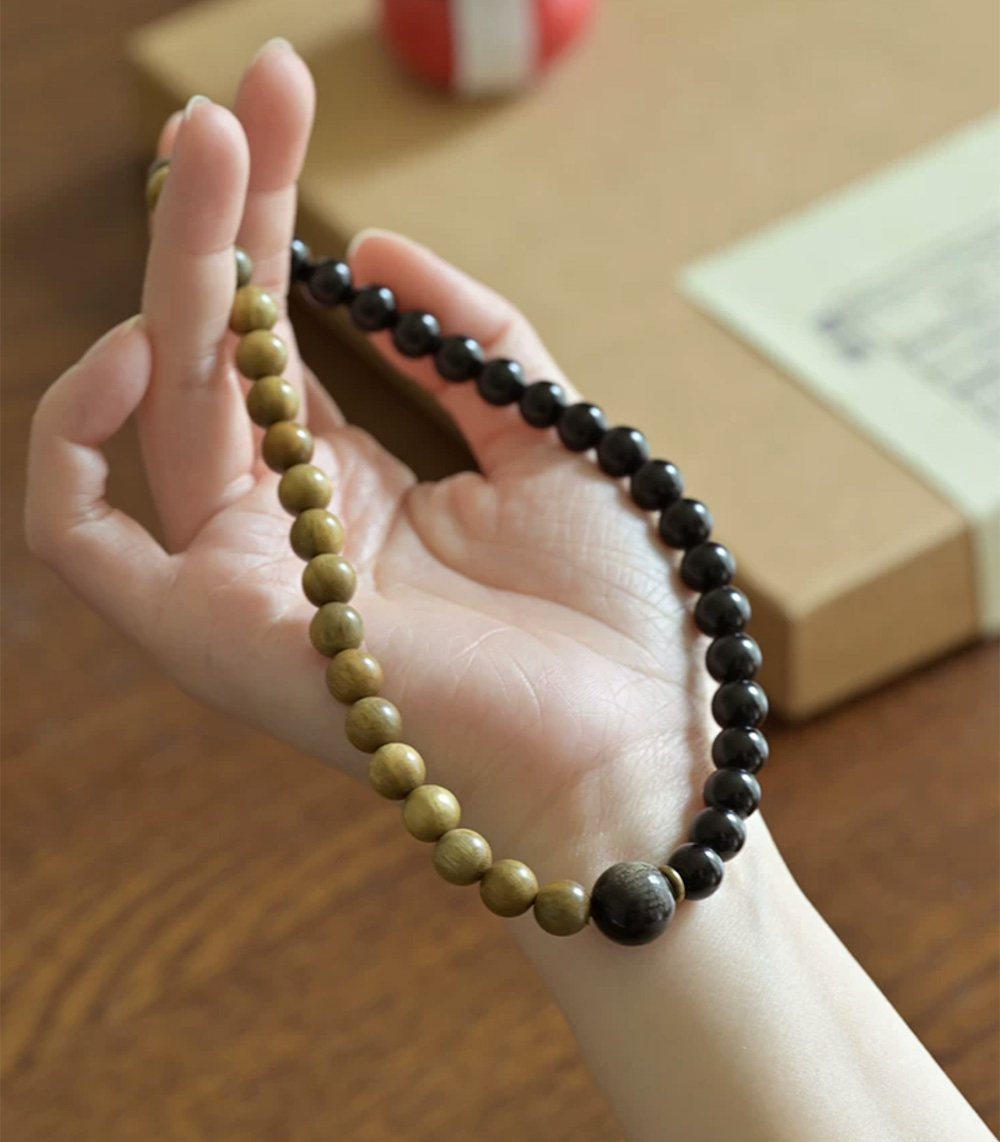

What are Tibetan Buddhist prayer beads?
Tibetan Buddhist prayer beads, also known as rosaries, have helped practitioners maintain focus in their Buddhist practice for centuries. Legend has it that the Buddha taught a suffering king to string together 108 beads from the Bodhi tree and recite a mantra as he moved each bead. Over time, this practice evolved into the classic 108-bead rosary. The circular shape symbolizes the perfection of enlightenment, and each bead represents one of the “108 afflictions” that practitioners strive to overcome.
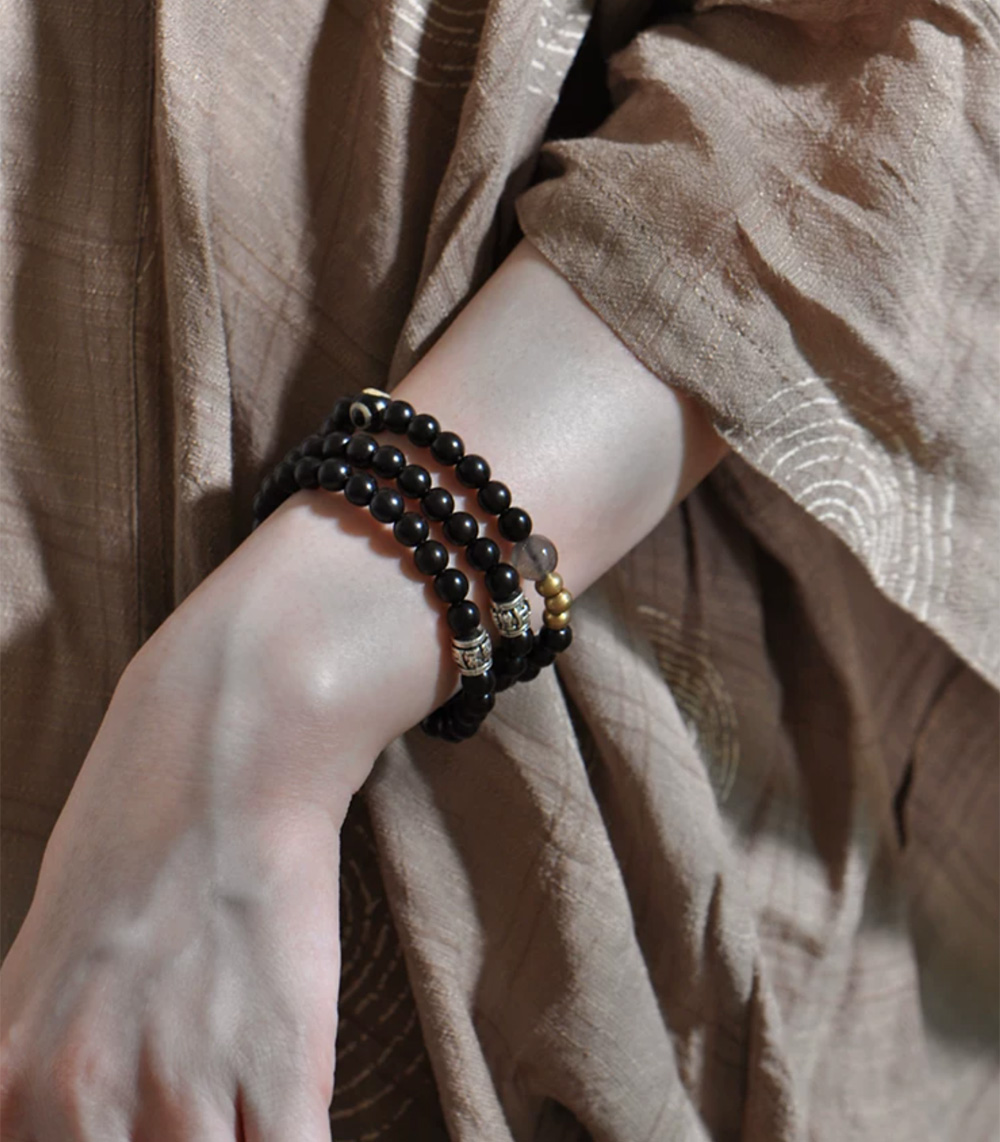
The structure and materials of traditional Buddhist prayer beads
Traditional Tibetan Buddhist prayer beads consist of 108 counting beads, often made of sacred materials such as sandalwood and bodhi seeds. A larger “Buddha head bead” or “mother bead” marks the beginning and end of the rosary. Many prayer beads also include two strings of ten beads each to record more than 108 recitations, and use tassels, metal spacers, or small ornaments to enhance their appearance and provide positioning guidance.
How to use prayer beads
When using prayer beads, gently move each bead with your thumb and middle finger while reciting a designated mantra, scripture, or affirmation. The steady rhythm of moving the beads helps to guide scattered thoughts into sustained focus. In Tibetan Buddhist teachings, the six afflictions arising from the six senses, multiplied by the past, present, and future, amount to 108 challenges. Reciting the mantra 108 times symbolizes overcoming all obstacles. Through the tactile sensation of the beads in the palm, practitioners cultivate concentration, self-awareness, and emotional balance, bringing mindfulness into daily life.